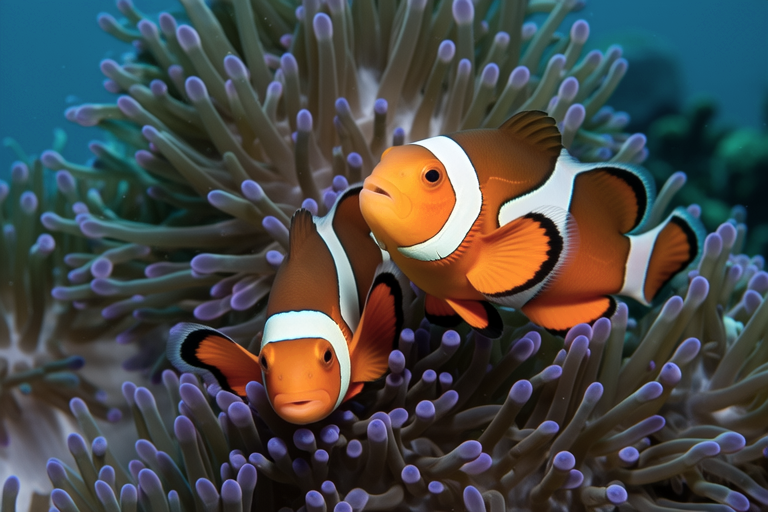
Clownfish Companionship: Unraveling Their Unique Bond with Sea Anemones
In the vast and intricate world of marine life, few relationships are as fascinating as that between the clownfish and its host, the sea anemone. This symbiotic partnership has long intrigued scientists and marine enthusiasts alike, offering a window into the complex interactions within oceanic ecosystems. The clownfish, known for its vibrant colors and playful demeanor, finds refuge among the tentacles of the sea anemone, while the anemone benefits from the clownfish’s presence in ways that enhance its survival. This article delves into the unique bond between these two species, exploring the benefits, mechanisms, and ecological significance of their relationship.
The Symbiotic Relationship
The relationship between clownfish and sea anemones is a classic example of mutualism, where both species benefit from each other. Clownfish, also known as anemonefish, are small, brightly colored fish that live exclusively among the tentacles of certain species of sea anemones. These anemones are stationary polyps that possess stinging cells called nematocysts, which they use to capture prey and deter predators. However, clownfish have evolved to be immune to the anemone’s stings, allowing them to coexist peacefully.
For the clownfish, the anemone provides protection from larger predators. The tentacles of the anemone act as a shield, hiding the clownfish from potential threats. In return, the clownfish offer several advantages to the anemone. They clean the anemone by removing parasites and dead tissue, thus keeping it healthy. Additionally, the clownfish’s excretions provide nutrients that can enhance the anemone’s growth and reproduction.
Chemical Signals and Protection
One of the most intriguing aspects of the clownfish-anemone relationship is how clownfish manage to avoid the anemone’s stings. Research has shown that clownfish produce a protective mucus layer on their skin that contains chemical compounds similar to those found in the anemone itself. These chemicals mask the clownfish’s scent, making it indistinguishable from the anemone to the nematocysts. This adaptation allows the clownfish to move freely among the tentacles without triggering the anemone’s defensive mechanism.
The mucus layer is not static; it evolves over time as the clownfish spends more time with its host anemone. Initially, the clownfish may still trigger some nematocysts, but as it becomes more accustomed to the anemone, the number of triggered stings decreases significantly. This process highlights the dynamic nature of the relationship and the ongoing adaptation required to maintain it.
Behavioral Adaptations
Clownfish have developed several behavioral adaptations to thrive in their anemone homes. One of the most notable behaviors is their tendency to swim in a zigzag pattern when entering or leaving the anemone. This erratic movement helps to minimize contact with the anemone’s tentacles, reducing the risk of triggering nematocysts. Additionally, clownfish often perform cleaning behaviors, such as nibbling at the anemone’s tentacles, which not only benefits the anemone but also reinforces the clownfish’s position as a valued partner.
Within the anemone, clownfish establish a strict hierarchy, with one dominant pair of fish and several subordinate individuals. The dominant pair typically controls access to the best nesting sites and breeding opportunities. This social structure ensures that resources are efficiently managed within the group, contributing to the overall success of the colony.
Ecological Significance
The mutualistic relationship between clownfish and sea anemones plays a crucial role in maintaining the health and biodiversity of coral reef ecosystems. By enhancing the growth and reproduction of anemones, clownfish indirectly support the survival of other organisms that depend on these habitats. For instance, anemones provide shelter for various small invertebrates, which in turn serve as food sources for larger fish and marine mammals.
The presence of clownfish also helps to regulate the population dynamics of the anemone. By feeding on parasites and debris, clownfish reduce competition for resources and prevent the spread of diseases that could otherwise harm the anemone. This balance is essential for the stability of the ecosystem, ensuring that all components remain in harmony.
Challenges and Environmental Changes
Despite the many benefits of their mutualism, the relationship between clownfish and sea anemones faces several challenges, particularly in light of global environmental changes. Rising ocean temperatures, increased acidity, and pollution can negatively impact both species. Warmer waters can lead to coral bleaching events, which not only affect the anemones but also the clownfish that rely on them for shelter. Additionally, increased acidity can weaken the anemone’s ability to defend itself, making it more vulnerable to predation and disease.
Pollution, especially from agricultural runoff and plastic waste, poses another significant threat. Chemicals from these pollutants can disrupt the delicate balance of the clownfish-anemone relationship, affecting the clownfish’s ability to produce protective mucus and the anemone’s capacity to provide shelter. Conservation efforts aimed at mitigating these threats are critical to preserving the integrity of this unique partnership.
Conclusion
The relationship between clownfish and sea anemones is a testament to the complexity and resilience of marine ecosystems. Through their mutualistic partnership, these two species have evolved to complement each other, creating a harmonious coexistence that benefits both parties. As we continue to explore and understand the intricacies of this relationship, it becomes increasingly clear that the preservation of such symbiotic interactions is vital for the health and sustainability of our oceans. By addressing the challenges posed by environmental changes, we can help ensure that future generations will continue to marvel at the wonders of clownfish companionship.
