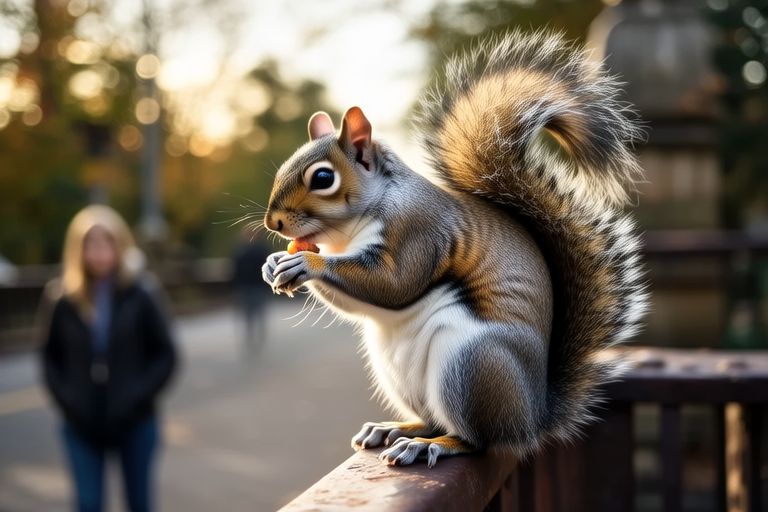
Urban Squirrels: Navigating the Human-Dominated Landscape
In the heart of bustling cities, where concrete jungles reign supreme, a surprising cast of characters thrives amidst the cacophony of human life. Among them are the agile and resourceful squirrels, who have adapted to urban environments with remarkable resilience. These small mammals, once native to forests and woodlands, have now found a new home in parks, streets, and residential areas. This article explores the behaviors, adaptations, and challenges faced by squirrels living in urban environments, offering insights into their navigation through human-dominated landscapes, dietary changes, interactions with humans, and their role in urban ecosystems.
Adaptations for Urban Living
Squirrels have developed a suite of adaptations that enable them to thrive in cities. One of the most notable is their ability to exploit anthropogenic resources, such as food provided by humans. In a study conducted by the University of Georgia, it was found that urban squirrels consume a wide variety of foods, including nuts, seeds, fruits, and even discarded human snacks. This dietary flexibility allows them to survive in environments where natural food sources may be scarce.
Another adaptation is their adeptness at navigating urban spaces. Squirrels are highly skilled climbers, capable of scaling buildings, fences, and trees with ease. Their strong claws and flexible bodies make them excellent acrobats, enabling them to traverse complex urban landscapes with agility. Additionally, squirrels have become accustomed to crossing busy roads, often using traffic signals as cues to determine when it’s safe to cross. A study published in the Journal of Zoology revealed that urban squirrels exhibit riskier behavior than their rural counterparts, frequently venturing onto roads and taking greater risks in pursuit of food.
Dietary Changes Due to Urbanization
The transition from forest to city has significantly altered the diets of urban squirrels. While their wild counterparts primarily feed on acorns, nuts, and seeds, city-dwelling squirrels have expanded their menu to include a broader range of items. In addition to scavenging for discarded food in garbage bins, they also visit bird feeders, picnic areas, and gardens in search of sustenance. This shift in diet can have both positive and negative effects on their health. On one hand, it provides them with a more diverse array of nutrients; on the other, it exposes them to potentially harmful substances like salt, sugar, and pesticides.
One interesting aspect of urban squirrel diets is their preference for certain types of food over others. For example, studies have shown that they tend to favor sunflower seeds and peanuts over other options. This selective feeding behavior suggests that squirrels have developed a sophisticated understanding of which foods offer the best nutritional value. Furthermore, urban squirrels have been observed engaging in food caching behavior, storing excess food in hidden locations for later consumption. This strategy helps ensure their survival during periods of scarcity.
Interactions with Humans
Urban squirrels have established complex relationships with humans, ranging from mutualism to conflict. Many people enjoy watching these charismatic animals and even provide them with supplemental food. However, this close proximity can sometimes lead to conflicts, particularly when squirrels become too bold or destructive. For instance, they may chew on electrical wires, raid bird feeders, or damage property while searching for nesting materials.
Despite occasional nuisances, most humans view squirrels positively. They are often seen as symbols of nature within the city and serve as a reminder of the interconnectedness between urban and natural environments. Some cities even promote programs aimed at educating residents about coexisting with wildlife, encouraging responsible feeding practices and habitat preservation. Moreover, squirrels contribute to urban biodiversity by dispersing seeds and helping to maintain healthy plant communities.
Role in Urban Ecosystems
Urban squirrels play a vital role in maintaining ecological balance within city limits. As seed dispersers, they help propagate native plants, contributing to the regeneration of green spaces. Their burrowing activities aerate soil, improving its structure and fertility. Additionally, squirrels serve as prey for larger predators, such as hawks and foxes, thus supporting higher trophic levels in urban ecosystems.
Recent research has highlighted the importance of urban squirrels in promoting biodiversity. A study published in the journal Urban Ecosystems demonstrated that areas with high squirrel populations tended to have greater species richness compared to those without. This finding underscores the value of conserving urban wildlife habitats and suggests that efforts to protect squirrels could indirectly benefit other animal species as well.
Unique Survival Strategies and Social Behaviors
Urban squirrels employ several unique survival strategies to cope with the challenges posed by city life. One notable adaptation is their tendency to form loose social groups, particularly during winter months when food becomes scarce. These groups allow individuals to share information about food sources and defend territories against intruders. Another strategy involves altering daily activity patterns based on environmental conditions. For example, squirrels may become more nocturnal in response to increased human activity during daylight hours.
Research conducted by Dr. Richard S. Ostfeld, a disease ecologist at the Cary Institute of Ecosystem Studies, has shed light on another fascinating aspect of urban squirrel behavior: their potential role in spreading infectious diseases. Ostfeld’s work indicates that urban squirrels may act as reservoir hosts for pathogens that can affect both wildlife and humans. While this poses certain risks, it also highlights the need for ongoing monitoring and management of urban wildlife populations.
Conclusion
Urban squirrels exemplify the remarkable adaptability of wildlife in the face of rapid environmental change. By exploring their behaviors, adaptations, and challenges, we gain valuable insight into how animals can thrive in human-dominated landscapes. From exploiting anthropogenic resources to forming social bonds, these creatures demonstrate a resilience that challenges our perceptions of what it means to be “wild.” As cities continue to expand, understanding the intricate dynamics between humans and urban wildlife will be crucial for fostering harmonious coexistence and preserving biodiversity in our rapidly urbanizing world.
