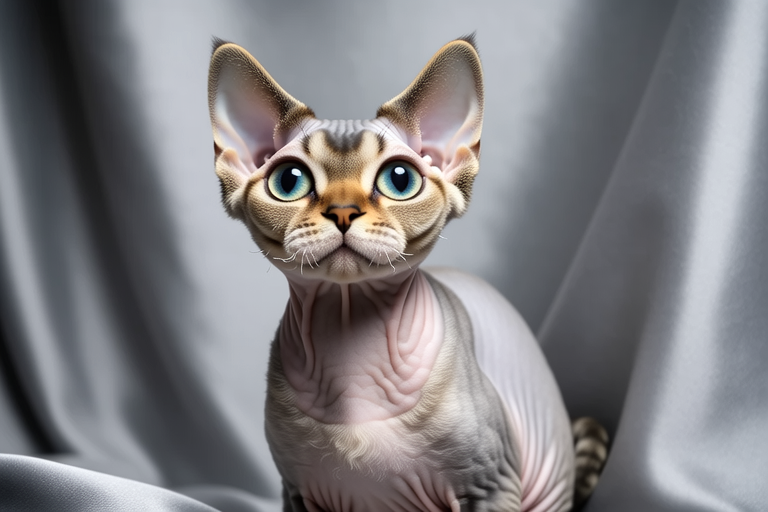
Devon Rex Cats: A Close-Up Look at Their Bizarre Yet Alluring Appearance
Devon Rex cats are a breed known for their unique appearance and playful personalities. With their curly coats, large ears, and mischievous expressions, these cats have captured the hearts of many cat enthusiasts and potential pet owners. This article explores the distinct physical traits of Devon Rex cats, their genetic makeup, historical background, common misconceptions, and provides insights into their temperament and care requirements. Real stories and testimonials from owners will also be shared to illustrate the charm and appeal of Devon Rex cats.
Distinctive Physical Traits
The most striking feature of Devon Rex cats is their curly coat. Unlike other breeds with longer fur, Devon Rex cats have a shorter, wavy coat that gives them a sleek and almost hairless appearance. The curls in their coat are caused by a genetic mutation that affects the structure of their hair follicles. This mutation results in a coat that is soft to the touch and often described as feeling like suede or velvet. The texture of their fur is one of the reasons why Devon Rex cats are so appealing to people who love the feel of a cat but may be allergic to traditional breeds.
In addition to their curly coats, Devon Rex cats are known for their large ears. These ears are set low on their heads and give them an almost elf-like appearance. The large size of their ears makes them highly sensitive to sound, which can make Devon Rex cats excellent hunters. They are also known for their expressive faces, which often display a mischievous or playful expression. This combination of large ears and expressive faces contributes to the overall charm of Devon Rex cats.
Another unique trait of Devon Rex cats is their short legs and long bodies. These features give them a distinctive appearance that sets them apart from other cat breeds. Their long bodies and short legs make them agile and quick, allowing them to move with grace and precision. This agility is reflected in their playful nature, as they enjoy chasing toys and playing games with their owners.
Genetic Basis of Their Unusual Appearance
The distinctive appearance of Devon Rex cats is due to a genetic mutation that affects the structure of their hair follicles. This mutation causes the hair to curl, resulting in the characteristic curly coat of the breed. The mutation is recessive, meaning that both parents must carry the gene for the offspring to exhibit the curly coat. Devon Rex cats are also known for their large ears, which are caused by another genetic mutation that affects the cartilage in their ears.
The genetic basis of Devon Rex cats’ unusual appearance has been studied extensively by researchers. In a study published in the journal Mammalian Genome, researchers identified the gene responsible for the curly coat of Devon Rex cats. The gene, called KRT71, encodes a protein that is involved in the formation of hair shafts. Mutations in this gene result in abnormal hair shafts that are more likely to curl. The same gene has been implicated in curly-haired breeds of dogs, including poodles and bichon frises.
The genetic mutations that cause the curly coat and large ears of Devon Rex cats are rare, which is why the breed is relatively uncommon. However, the unique appearance of Devon Rex cats has made them popular among cat enthusiasts and potential pet owners. Their distinctive looks and playful personalities make them endearing companions for those who appreciate the quirks of feline genetics.
Historical Background of the Breed
The history of Devon Rex cats dates back to the 1960s when a curly-coated cat was discovered in Devon, England. The cat, named Kirlee, was found wandering near a junkyard and was taken in by a local woman. Kirlee’s curly coat caught the attention of a nearby breeder, who began breeding Kirlee with other cats to produce offspring with similar coats. Over time, the breed was refined and recognized by various cat registries, including the Cat Fanciers’ Association (CFA) and The International Cat Association (TICA).
Despite their popularity, Devon Rex cats remain a rare breed. Their distinctive appearance and playful personalities have made them a favorite among cat lovers, but their rarity means that they are not as widely available as some other breeds. However, their unique looks and charming personalities make them a rewarding companion for those who are willing to seek them out.
Popular Misconceptions About Devon Rex Cats
One common misconception about Devon Rex cats is that they are hypoallergenic. While Devon Rex cats do have less dense fur than some other breeds, they are not completely hypoallergenic. Like all cats, Devon Rex cats produce dander and saliva, which can trigger allergic reactions in some people. However, the reduced density of their fur means that they may be less likely to cause allergic reactions in some individuals.
Another misconception about Devon Rex cats is that they require less grooming than other breeds. While Devon Rex cats do have a shorter coat, they still require regular grooming to keep their fur healthy and free of tangles. Their curly coat can be prone to matting, especially around the neck and tail, so it is important to brush them regularly to prevent this from happening. Additionally, Devon Rex cats may shed more than other breeds, so regular brushing can help to reduce the amount of loose fur in the home.
Temperament and Care Requirements
Devon Rex cats are known for their playful and affectionate personalities. They are often described as being dog-like in their behavior, as they enjoy playing fetch and following their owners around the house. They are also very social animals, and many Devon Rex cats enjoy interacting with their owners throughout the day. This social nature makes them excellent companions for people who spend a lot of time at home.
While Devon Rex cats are generally healthy, they are prone to certain health issues, including patellar luxation and hypertrophic cardiomyopathy. Patellar luxation is a condition where the kneecap slips out of place, causing pain and discomfort. Hypertrophic cardiomyopathy is a heart disease that can lead to heart failure if left untreated. Regular veterinary check-ups can help to catch these conditions early and ensure that your Devon Rex cat remains healthy.
Devon Rex cats also require regular grooming to keep their coat healthy and free of tangles. Their curly coat can be prone to matting, especially around the neck and tail, so it is important to brush them regularly. Additionally, Devon Rex cats may shed more than other breeds, so regular brushing can help to reduce the amount of loose fur in the home.
Real Stories and Testimonials
Many Devon Rex cat owners have shared their experiences with these unique and charming cats. One owner, Sarah, describes her Devon Rex cat, Luna, as “the most playful and affectionate cat I’ve ever owned.” Sarah says that Luna loves to play fetch and follows her around the house, always looking for ways to interact. “She’s always up for a game, and she never seems to tire of playing,” Sarah says. “I love how much energy she has, and I think that’s part of what makes her so endearing.”
Another owner, John, says that his Devon Rex cat, Max, is “a true companion.” John says that Max enjoys sitting on his lap while he works and often follows him from room to room. “He’s always looking for ways to be close to me,” John says. “I think that’s part of what makes Devon Rex cats such great companions – they’re always looking for ways to connect with their owners.”
These real stories and testimonials highlight the charm and appeal of Devon Rex cats. Their unique appearance, playful personalities, and social nature make them endearing companions for people who appreciate the quirks of feline genetics. Whether you’re a cat enthusiast or a potential pet owner, Devon Rex cats are sure to capture your heart with their distinctive looks and lovable personalities.
