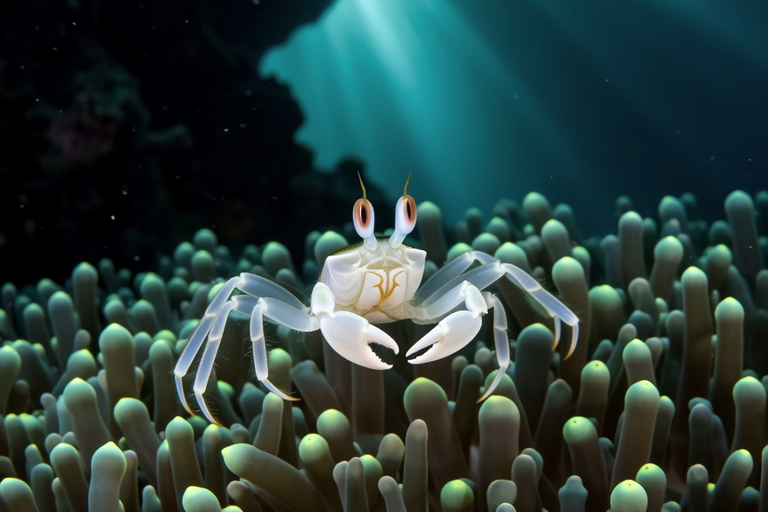
Tiny but Tenacious: Unveiling the Mysterious Pea Crab Lifestyle
In the vast oceanic realm, where giant whales and colorful coral reefs thrive, there exists a minuscule inhabitant that often goes unnoticed. The pea crab, scientifically known as Pinnotheres, is a fascinating creature with a lifestyle as unique as it is intriguing. Despite its diminutive size, this crustacean has carved out a niche for itself through adaptability and resilience, making it a remarkable subject for marine biologists and nature enthusiasts alike.
Unique Characteristics
The pea crab, aptly named for its resemblance to a green pea, is one of the smallest crabs in the world, typically ranging from 4 to 10 millimeters in length. Its body is flattened and oval-shaped, covered in a hard exoskeleton that provides protection from predators. One of the most distinctive features of the pea crab is its ability to change color to match its host, a skill that aids in camouflage and protection. This adaptation showcases the pea crab’s remarkable ability to blend into its environment, highlighting its evolutionary success.
Habitat
Pea crabs are predominantly found in coastal waters, often residing within the bodies of other marine organisms. They have been discovered in various parts of the world, from the warm waters of the Mediterranean to the chilly depths of the Pacific Ocean. These tiny crabs prefer to live in bivalves such as oysters, scallops, and clams, where they can find shelter and food. Their preference for these hosts is not just for safety; it also provides them with a steady supply of nutrients, allowing them to thrive in environments where larger predators might find it challenging to survive.
Diet
Contrary to popular belief, pea crabs do not rely solely on their hosts for sustenance. While they can feed on the soft tissues of their hosts when necessary, their primary diet consists of plankton and detritus. The crabs extend their feeding appendages outside their host to filter the water, catching microscopic organisms that drift by. This method of feeding allows them to consume a wide variety of nutrients, ensuring a balanced diet that supports their growth and development. Their opportunistic feeding habits further demonstrate their adaptability, enabling them to survive in diverse aquatic environments.
Reproduction
The reproductive cycle of pea crabs is equally fascinating. Mating typically occurs when the female reaches sexual maturity, which can vary depending on species and environmental conditions. Once mating takes place, the female carries her fertilized eggs beneath her abdomen until they hatch. The larvae, known as zoeae, are released into the water column, where they undergo several molts before settling down and finding a suitable host. This complex life cycle ensures the continuation of the species, with each generation adapting to the challenges of their aquatic world.
Symbiotic Relationships
One of the most captivating aspects of pea crab biology is their symbiotic relationship with their hosts. This relationship is classified as parasitic commensalism, meaning that while the pea crab benefits from the host, the host remains largely unaffected. In some cases, the presence of pea crabs can even provide a defensive advantage to their hosts. For instance, certain species of pea crabs have been observed defending their hosts against intruders, adding an unexpected layer of complexity to their interactions.
Another interesting anecdote involves the relationship between pea crabs and pearl oysters. In the wild, pea crabs can be found inside pearl oysters, where they coexist without significantly impacting the oyster’s health. However, in the pearl industry, the presence of pea crabs can sometimes lead to the production of ‘pea pearls,’ small pearls that form around the crab instead of a grain of sand. While these pearls are not as valuable as those formed naturally, they still hold a special place in the history of pearl cultivation.
Adaptability and Resilience
Despite their small size, pea crabs have shown remarkable adaptability and resilience in the face of changing environmental conditions. They have managed to establish themselves in various habitats, from shallow coastal waters to deeper marine environments. Their ability to adjust to different living conditions and food sources underscores their tenacity. Additionally, pea crabs have evolved specific behaviors to cope with environmental stressors, such as the ability to tolerate low oxygen levels and high salinity, further emphasizing their survival skills.
Conclusion
The pea crab may be tiny, but its impact on marine ecosystems and our understanding of symbiotic relationships cannot be understated. From their unique physical characteristics to their intricate lifestyles, these crabs offer a window into the complexities of life in the oceans. As we continue to explore and learn about these fascinating creatures, it becomes increasingly clear that the ocean’s smallest inhabitants play a significant role in maintaining the balance of life beneath the waves.
Whether you’re a seasoned marine biologist or simply someone who enjoys learning about the wonders of the natural world, the pea crab’s story is one worth telling. It serves as a reminder of the beauty and complexity that exists in even the smallest corners of our planet.
