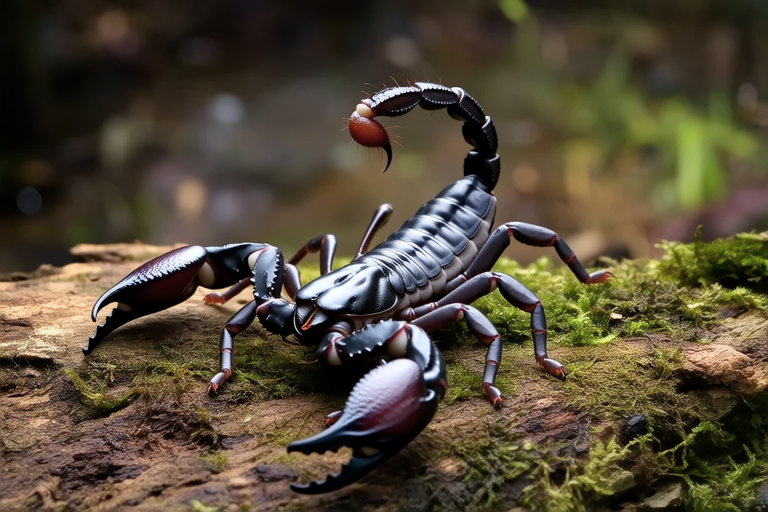
From Fear to Fascination: Discovering the Life of the Heterometrus Spinifer
In the world of arachnids, few creatures inspire as much fear as scorpions. Their menacing appearance, equipped with pincers and a fearsome stinger, often evokes images of danger and pain. However, one species stands out from the crowd, challenging these preconceived notions: the Heterometrus spinifer. This article embarks on a journey to unravel the mysteries of this fascinating creature, dispelling myths and uncovering the intricate details of its life.
The Misunderstood Marvel
The Heterometrus spinifer, commonly known as the Asian forest scorpion, is a species that thrives in Southeast Asia’s dense jungles. Despite its intimidating appearance, this scorpion is far less aggressive than many might believe. Unlike its desert-dwelling cousins, the Heterometrus spinifer prefers to avoid confrontation, using its venom primarily for hunting small insects rather than defending itself against larger threats.
A Masterpiece of Evolution
The Heterometrus spinifer boasts a striking appearance, characterized by its robust body and distinctive spines that run along its tail. These spines serve both as a defensive mechanism and a means of identifying the species. The scorpion’s body is segmented into two main parts: the cephalothorax and the abdomen. The cephalothorax houses vital organs such as the heart, digestive system, and reproductive organs. Meanwhile, the abdomen, also known as the metasoma, contains the venomous stinger located at its tip.
The scorpion’s exoskeleton, composed of chitin, provides protection against predators and environmental hazards. Its coloration ranges from dark brown to black, allowing it to blend seamlessly into its surroundings. The Heterometrus spinifer’s pincers, or pedipalps, are powerful tools used for capturing prey and manipulating objects. These appendages are covered in sensitive hairs that detect vibrations, aiding the scorpion in locating potential food sources.
Habitat and Diet
Native to the tropical forests of Southeast Asia, the Heterometrus spinifer can be found in countries like Thailand, Malaysia, and Indonesia. It prefers humid environments with plenty of hiding spots, such as under rocks, logs, and leaf litter. These habitats provide shelter from predators and harsh weather conditions, ensuring the scorpion’s survival.
The Heterometrus spinifer is a nocturnal predator, emerging at night to hunt for food. Its diet primarily consists of small insects, spiders, and other arthropods. Using its pincers to grasp prey, the scorpion injects venom through its stinger to immobilize and digest its meal externally. This process allows the scorpion to consume even the toughest of exoskeletons.
Behavior and Reproduction
The Heterometrus spinifer is a solitary creature, only coming together during the mating season. Males perform elaborate courtship dances to attract females, utilizing their pincers to create rhythmic movements that signal readiness for reproduction. Once paired, the male deposits sperm onto a surface for the female to collect, completing the fertilization process.
After mating, the female carries her eggs internally until they hatch. She then gives birth to live young, which remain attached to her back for several days. During this period, the mother provides protection and nourishment, ensuring the survival of her offspring. Once independent, the juveniles venture off to establish their own territories, repeating the cycle of life.
Unique Adaptations
The Heterometrus spinifer has evolved several remarkable adaptations that enable it to thrive in its environment. One of its most notable features is its ability to sense vibrations in the ground, allowing it to detect approaching prey or potential threats. This heightened sensitivity is crucial for the scorpion’s survival in the wild.
Another adaptation is its highly efficient venom delivery system. The venom produced by the Heterometrus spinifer contains a cocktail of neurotoxins designed to paralyze prey quickly. While potent enough to subdue small insects, the venom is generally harmless to humans, making encounters with this species relatively safe.
Ecosystem Role and Cultural Significance
The Heterometrus spinifer plays a vital role in its ecosystem, acting as both predator and prey. By controlling insect populations, it helps maintain a balanced food web, preventing overpopulation and ensuring the health of the forest. Additionally, the scorpion serves as a food source for various animals, including birds and mammals.
Culturally, the Heterometrus spinifer holds significant importance in many Southeast Asian communities. In some regions, it is revered as a symbol of strength and resilience, while in others, it is feared and avoided. Local folklore often attributes mystical powers to the scorpion, weaving tales of bravery and cunning into its legend. These stories not only entertain but also teach valuable lessons about respect for nature and its inhabitants.
Conservation Efforts and Importance
Despite its ecological importance, the Heterometrus spinifer faces numerous threats, including habitat destruction and climate change. Deforestation and urbanization have led to the loss of suitable habitats, forcing scorpions to relocate to less favorable areas. Conservationists are working tirelessly to protect these creatures, implementing strategies such as reforestation projects and public awareness campaigns.
Understanding the Heterometrus spinifer is crucial for maintaining biodiversity and preserving ecosystems. By studying this species, scientists gain valuable insights into evolutionary processes and adaptability. Moreover, the knowledge gained can be applied to other fields, including medicine and biotechnology, where scorpion venom is being explored for potential therapeutic uses.
In conclusion, the Heterometrus spinifer is a remarkable creature that challenges our perceptions of what it means to be a scorpion. From its physical characteristics to its behavior and cultural significance, this species offers a wealth of information and inspiration. By appreciating the complexity and beauty of the Heterometrus spinifer, we can foster a greater understanding and respect for all living beings, contributing to a healthier and more harmonious world.
