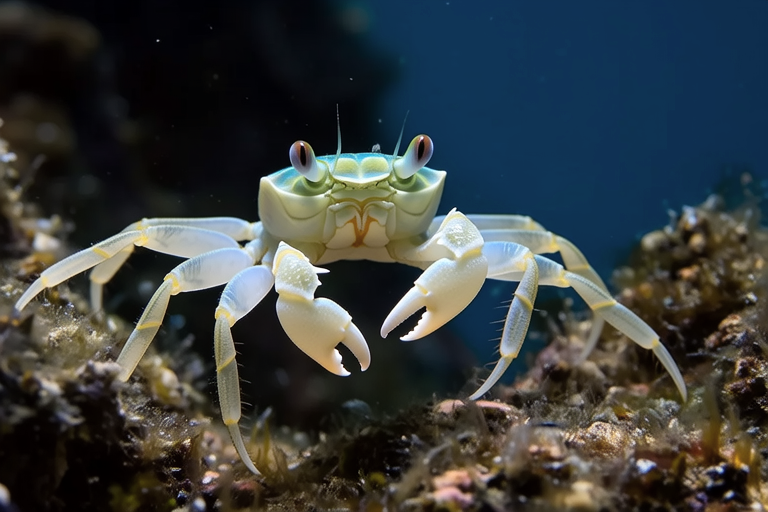
Pea Crabs: From Microscopic to Mysterious
In the vast and diverse world of marine life, few creatures are as diminutive yet fascinating as pea crabs. These minute crustaceans, scientifically classified under the superfamily Pinnotheroidea, have captivated the curiosity of scientists and nature enthusiasts alike for centuries. With their microscopic size, intricate symbiotic relationships, and mysterious habits, pea crabs offer a window into the complex and often overlooked microcosms of the ocean. This article delves into the unique characteristics of pea crabs, exploring their size, habitats, symbiotic partnerships, reproductive strategies, and the enduring myths and mysteries that surround them.
A Tiny Marvel
Pea crabs are aptly named for their minuscule size, typically ranging from just 3 millimeters to a maximum of 15 millimeters in length. Their diminutive stature belies their importance within the marine ecosystem. Despite their small size, they possess all the key features of larger crab species, including a hard exoskeleton, five pairs of legs, and claws that are proportionally large for their body size. The exoskeleton of pea crabs is particularly intriguing, as it undergoes molting—a process where the crab sheds its old shell to make way for a new, larger one. This characteristic is crucial for their growth and survival.
Their small size makes them nearly invisible to most predators, offering a significant advantage in the underwater world. However, it also presents challenges, such as limited mobility and difficulty in finding food. To overcome these obstacles, pea crabs have evolved remarkable adaptations that allow them to thrive in their specific environments.
Habitats: The Hidden Depths
Pea crabs are found in a wide range of marine environments, from shallow coastal waters to the deep ocean trenches. They are predominantly associated with sessile organisms, meaning they live attached to stationary hosts. Some of the common hosts include bivalves like mussels, oysters, and scallops, as well as sea cucumbers and sea anemones. Pea crabs exhibit a preference for specific hosts, which can vary depending on the species. For example, Pinnixa faba, commonly known as the mussel pea crab, exclusively inhabits mussels.
The choice of host is not arbitrary; it plays a critical role in the crab’s survival. The host provides protection, a stable environment, and a constant source of food. In return, the pea crab offers some benefits to its host, creating a mutually beneficial relationship known as commensalism. This symbiotic arrangement ensures the survival of both parties in the challenging marine environment.
Symbiosis: A Dance of Life
The symbiotic relationship between pea crabs and their hosts is one of the most fascinating aspects of their biology. These tiny crustaceans live inside the shells of their hosts, where they are shielded from predators and environmental stressors. The relationship is often described as commensalism, where one organism benefits without affecting the other. However, recent studies suggest that the relationship might be more complex than initially thought.
While the pea crab primarily feeds on the host’s gametes and waste products, there is evidence that it may also play a role in cleaning the host’s tissues, potentially enhancing the host’s health. This mutualistic relationship, where both organisms benefit, has been observed in certain species of pea crabs. For instance, the presence of pea crabs in oysters has been linked to improved water quality around the oyster, indirectly benefiting the entire ecosystem.
The specificity of these relationships is remarkable. Each species of pea crab tends to associate with only one or a few specific host species. This specialization has led to the evolution of highly adapted behaviors and morphological features. For example, pea crabs that inhabit bivalves have modified appendages that help them cling tightly to the host’s internal structures, ensuring they are not dislodged during the host’s movements.
Reproduction: A Journey of Transformation
The reproductive cycle of pea crabs is a testament to their adaptability and resilience. Unlike many other crustaceans, pea crabs do not engage in external fertilization. Instead, males and females mate internally, with the female carrying the fertilized eggs in a brood pouch located beneath her abdomen. This method of reproduction ensures that the eggs are protected from external threats and environmental hazards.
The development of the eggs is closely tied to the lifecycle of the host. As the host grows, so does the brood pouch, providing ample space for the developing embryos. Once the eggs hatch, the larvae are released into the water column, where they undergo several stages of development before settling onto a suitable host. This process is highly synchronized with the tides and currents, increasing the chances of successful settlement.
The ability of pea crabs to reproduce within the safety of their host’s shell is a remarkable adaptation that allows them to thrive in environments where external reproduction would be perilous. It also highlights the intricate balance that exists between the host and the symbiont, ensuring the continuation of this unique relationship across generations.
Myths and Mysteries
Throughout history, pea crabs have been surrounded by myths and legends, adding an air of mystery to their already enigmatic existence. One popular myth, prevalent in many coastal communities, suggests that the presence of pea crabs in oysters is a sign of good fortune. This belief has contributed to the cultural significance of these tiny creatures and has influenced fishing practices and culinary traditions.
However, beyond folklore, there are still many unanswered questions about pea crabs. One of the most intriguing mysteries is their precise role in the marine ecosystem. While their symbiotic relationships with hosts are well-documented, the broader impact of pea crabs on marine biodiversity remains largely unexplored. Scientists continue to investigate whether pea crabs play a role in nutrient cycling, disease control, or even genetic diversity within their host populations.
Another area of mystery revolves around the genetic diversity of pea crabs. Given their widespread distribution and varied host associations, it is unclear how different species of pea crabs have evolved and diversified. Advances in genetic sequencing techniques offer promising avenues for unraveling these mysteries, potentially revealing insights into the evolutionary history of these tiny crustaceans.
The Future of Pea Crabs
As our understanding of pea crabs continues to grow, so too does the need for conservation efforts to protect these fascinating creatures. Climate change, pollution, and overfishing pose significant threats to the marine ecosystems where pea crabs reside. Protecting their hosts, such as oysters and mussels, is essential for maintaining the delicate balance of these symbiotic relationships.
Future research could focus on understanding the specific mechanisms that enable pea crabs to thrive in their hosts, as well as the broader ecological impacts of their presence. Additionally, genetic studies could provide valuable insights into the evolutionary history of pea crabs and their adaptations to various environments.
Conservation efforts should also consider the economic implications of pea crabs. In some regions, the presence of pea crabs in commercially important bivalves can lead to significant economic losses. Developing sustainable harvesting practices and fostering public awareness about the importance of pea crabs in marine ecosystems could mitigate these issues while preserving the delicate balance of marine life.
Conclusion
Pea crabs, with their microscopic size, intricate symbiotic relationships, and mysterious habits, offer a captivating glimpse into the hidden worlds of marine biology. From their tiny, armored bodies to their complex reproductive strategies, these creatures are a testament to the adaptability and resilience of life in the oceans. As we continue to explore and understand these tiny crustaceans, it becomes increasingly clear that their role in marine ecosystems extends far beyond their diminutive size. By fostering a deeper appreciation for pea crabs and the ecosystems they inhabit, we can work towards protecting these vital components of our planet’s biodiversity.
