Parrot Fish: Nature’s Underwater Rainbow Masters
The ocean is home to countless species of fish, each with its own unique set of features and behaviors. Among these, parrot fish stand out as some of the most fascinating and colorful creatures. Known for their vibrant hues and vital roles within coral reef ecosystems, they are true masters of the underwater rainbow. This article delves into the world of parrot fish, exploring their distinctive characteristics, behaviors, and the challenges they face in their natural habitats.
Vibrant Coloration: A Feast for the Eyes
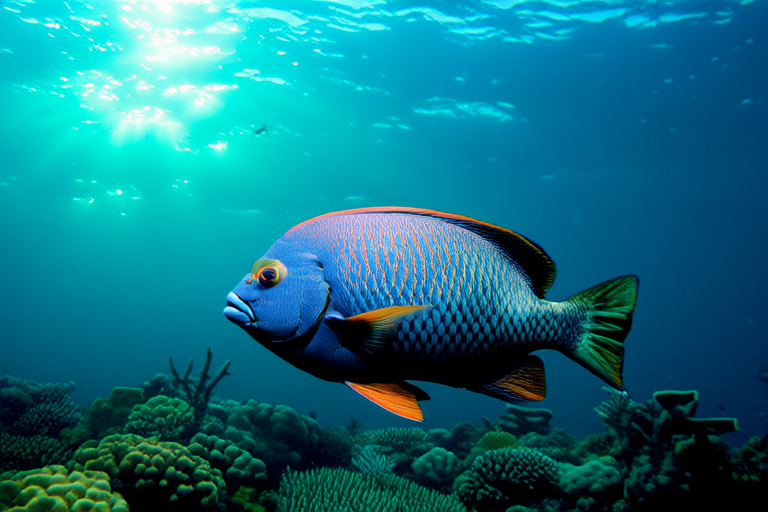
One of the first things that strike anyone who encounters a parrot fish is its striking appearance. These fish come in a dazzling array of colors, ranging from bright blues and greens to fiery oranges and reds. Their scales often shimmer with iridescent tones, creating a mesmerizing effect that rivals any terrestrial creature. The vividness of their coloration serves multiple purposes, including camouflage, mating displays, and warding off potential predators.
The diversity in color among different species and individuals within the same species can be attributed to factors such as age, sex, and social status. Juvenile parrot fish tend to have more subdued colors, which help them blend into their surroundings, while adult males often display more intense hues to attract mates or assert dominance over other males. Females, on the other hand, may exhibit less pronounced coloration but still contribute significantly to the overall visual spectacle of coral reefs.
Role in Coral Reef Ecosystems
Coral reefs are among the most biodiverse ecosystems on Earth, teeming with life and supporting thousands of species. Parrot fish play a crucial role in maintaining the health and structure of these delicate environments. By grazing on algae that grow on coral surfaces, they prevent the overgrowth of algae, which could otherwise smother and kill corals. This activity not only helps preserve the physical integrity of reefs but also promotes the growth of new coral colonies.
In addition to their direct impact on coral health, parrot fish indirectly support other marine organisms by breaking down coral skeletons through their powerful beaks. As they feed, they crush pieces of coral, releasing nutrients into the water column. These nutrients become available to plankton and other small organisms, forming the base of the food chain in reef ecosystems. Thus, parrot fish act as both gardeners and nutrient recyclers, contributing to the overall productivity and resilience of coral reefs.
Feeding Habits: Grazers of the Sea
Parrot fish are primarily herbivorous, relying on algae as their main source of nutrition. They use their strong, beak-like mouths equipped with rows of sharp teeth to scrape algae off rocks, coral, and other hard surfaces. Some species also consume seagrass and other plant material found in shallow waters. Their diet is essential for maintaining the balance between algae and coral growth, ensuring that neither dominates the ecosystem.
Interestingly, parrot fish have evolved specialized digestive systems that allow them to extract maximum nutrients from their plant-based diet. Their stomachs contain chambers filled with enzymes and bacteria that break down tough cellulose fibers, making it easier for the fish to digest algae. This adaptation enables them to thrive in environments where other herbivores might struggle to find sufficient food sources.
Defensive Mechanisms: Secreting a Protective Mucus Cocoon
Despite their vibrant appearance and important ecological roles, parrot fish are not immune to threats from predators. To protect themselves, many species develop an ingenious defense mechanism: secreting a protective mucus cocoon around their bodies before settling down for the night. This transparent, gelatinous layer acts as a barrier against parasites, bacteria, and even some predators.
The secretion process begins when parrot fish release mucus from glands located near their gills. As the mucus spreads across their bodies, it forms a thin, almost invisible shield. Some researchers believe that this cocoon also masks the fish’s scent, making it harder for nocturnal hunters to detect them. Furthermore, the mucus may contain compounds that deter certain parasites or pathogens, further enhancing the fish’s chances of survival during vulnerable nighttime hours.
Behavior and Reproduction Methods
Parrot fish exhibit a range of interesting behaviors that reflect their complex social structures and reproductive strategies. Many species form harems consisting of one dominant male and several females. In some cases, subordinate males may exist in these groups, waiting for opportunities to challenge the alpha male and take over leadership.
Reproduction among parrot fish typically involves elaborate courtship rituals, during which males display their brightest colors and perform intricate dances to attract females. Once a pair has formed, they engage in spawning events where eggs and sperm are released simultaneously into the water column. Fertilized eggs then drift away with ocean currents, eventually settling onto suitable substrates where they hatch into larvae.
Some species of parrot fish practice a phenomenon known as sequential hermaphroditism, meaning individuals can change sex throughout their lives. For example, a female may transform into a male if no dominant male is present in her group. This flexibility allows populations to adapt quickly to changing environmental conditions or demographic imbalances.
Challenges Facing Parrot Fish
Despite their importance to marine ecosystems and their remarkable adaptations, parrot fish face numerous threats that jeopardize their survival. Overfishing remains one of the most significant challenges, with many species targeted for their flesh or used in aquarium trade. Habitat destruction caused by coastal development, pollution, and climate change further exacerbates the situation.
Rising sea temperatures and ocean acidification resulting from global warming pose additional risks to parrot fish and the coral reefs upon which they depend. Warmer waters can lead to coral bleaching events, reducing the availability of suitable habitats for these fish. Ocean acidification weakens the structural integrity of coral skeletons, making it more difficult for parrot fish to access their primary food source.
Efforts are underway globally to address these issues and protect parrot fish populations. Marine protected areas (MPAs) have been established in key regions to limit fishing activities and promote recovery of depleted stocks. Conservation organizations work closely with local communities to raise awareness about sustainable fishing practices and encourage responsible tourism in reef areas.
Conclusion
Parrot fish truly deserve their reputation as nature’s underwater rainbow masters. With their dazzling coloration, vital roles in coral reef ecosystems, and fascinating behaviors, these fish captivate both scientists and casual observers alike. Understanding the challenges they face and taking steps to conserve their populations is crucial for preserving the rich biodiversity of our oceans. By learning more about parrot fish and supporting conservation efforts, we can help ensure that future generations will continue to marvel at these incredible creatures.
