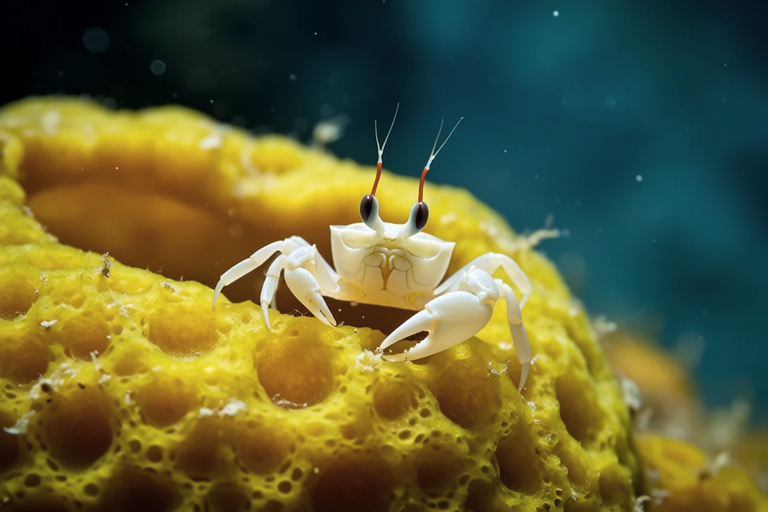
Meet the Tiny Crab Hiding Inside Sea Sponges
In the vast and diverse underwater world, there exists a remarkable symbiotic relationship between tiny crabs and sea sponges. This partnership, though often unnoticed, plays a crucial role in marine ecosystems. The tiny crab, known as the sponge-dwelling crab, lives within the intricate structure of sea sponges, creating a unique habitat that benefits both organisms. This article delves into the details of this fascinating relationship, highlighting the physical characteristics of the crab, the advantages it brings to both species, and the importance of understanding these relationships for marine conservation.
The Unique Symbiotic Relationship
The relationship between the tiny crab and the sea sponge is a classic example of mutualism, where both organisms benefit from each other. The crabs, which are part of the Parapaguridae family, have adapted to live inside various species of sea sponges. They find refuge within the sponge’s porous structure, which offers protection from predators and provides a stable environment. In return, the crabs help the sponges by consuming detritus and microorganisms that might otherwise clog the sponge’s filtration system, thus maintaining its health.
Physical Characteristics of the Crab
These crabs are incredibly small, typically measuring only a few millimeters in length. Their diminutive size allows them to maneuver easily within the complex architecture of the sponge. Their bodies are usually translucent or semi-transparent, enabling them to blend seamlessly with their surroundings. This camouflage helps them avoid detection by potential predators. The crabs have long, slender legs that allow them to navigate through the sponge’s intricate channels. Their claws, though small, are strong enough to hold onto the sponge’s surface, ensuring they do not get washed away by ocean currents.
How the Crab Fits Inside the Sponge
The crabs have adapted to fit perfectly within the sponge’s internal chambers. They enter through small openings or pores, which are large enough for them to squeeze through but too small for most predators. Once inside, they can move freely within the sponge’s network of tunnels and cavities. Some species of crabs even modify the sponge’s structure slightly to create more space or better access to food sources. This adaptation ensures that the crabs have ample room to grow and reproduce without leaving the protective confines of their sponge home.
Benefits of the Relationship
Mutual Protection
The primary advantage of this relationship is the mutual protection it offers. For the crabs, the sponge serves as a fortress against larger predators. The tough outer layer of the sponge acts as a barrier, making it difficult for many creatures to reach the crabs. Additionally, the crabs’ ability to camouflage themselves within the sponge further reduces their chances of being spotted. For the sponges, the crabs act as guardians, keeping harmful parasites and bacteria at bay. By consuming organic debris and microorganisms, the crabs help maintain the sponge’s cleanliness and overall health.
Resource Sharing
The relationship also involves a form of resource sharing. The crabs feed on detritus and microorganisms that accumulate within the sponge. These food sources are abundant due to the sponge’s constant filtration of water. In return, the crabs contribute to the sponge’s well-being by helping to keep its internal environment clean and free from obstructions. This mutual dependency ensures the survival and thriving of both organisms.
Distribution and Habitat
Sponge-dwelling crabs are found in various parts of the world’s oceans, ranging from shallow coastal waters to deep-sea environments. They are particularly common in tropical and subtropical regions where sea sponges thrive. Some notable locations include the coral reefs of the Indo-Pacific, the Caribbean Sea, and the Mediterranean. These areas provide ideal conditions for both the crabs and the sponges, with warm waters and abundant food sources. The diversity of sponge species in these regions means that there is a wide range of potential habitats for the crabs.
Threats to the Relationship
Despite their adaptability, both the crabs and the sponges face numerous threats in their natural habitats. One of the most significant challenges is environmental degradation caused by human activities such as pollution, overfishing, and climate change. Pollution, especially plastic waste and chemical runoff, can harm the sponges by blocking their pores and reducing their ability to filter water effectively. Overfishing disrupts the balance of marine ecosystems, leading to a decline in sponge populations. Climate change, with its associated rise in sea temperatures and increased acidity, poses a threat to the survival of both the crabs and the sponges.
Importance for Marine Conservation
Understanding the symbiotic relationship between the tiny crab and the sea sponge is vital for marine conservation efforts. By studying these interactions, scientists can gain insights into the broader ecological dynamics of marine ecosystems. This knowledge can help inform conservation strategies aimed at protecting not just individual species but entire habitats. Moreover, recognizing the interconnectedness of marine life underscores the importance of preserving biodiversity. Every organism, no matter how small, plays a role in maintaining the delicate balance of the ocean.
Conservation efforts can focus on reducing pollution, promoting sustainable fishing practices, and addressing the impacts of climate change. By safeguarding the habitats of these tiny crabs and their sponge companions, we can ensure the continued health and resilience of marine ecosystems. This, in turn, benefits not only the crabs and sponges but also the countless other species that depend on these environments for survival.
In conclusion, the tiny crab hiding inside sea sponges exemplifies the intricate and interdependent nature of marine life. Through their symbiotic relationship, these crabs and sponges demonstrate the beauty and complexity of the underwater world. Understanding and protecting these relationships is essential for the preservation of marine biodiversity and the health of our oceans. As we continue to explore and learn about the hidden corners of the sea, we must remember the importance of every organism, no matter how small, in maintaining the balance of life beneath the waves.
