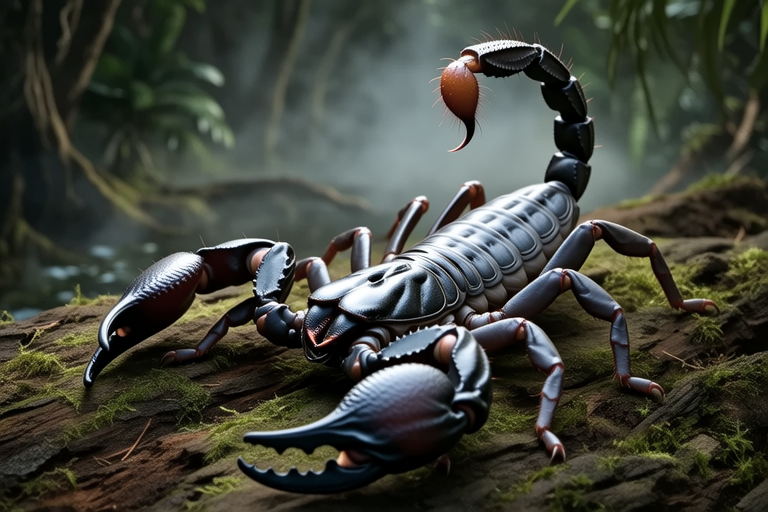
The Heterometrus Spinifer: The Hairy Ruler of the Night
The Heterometrus spinifer, commonly known as the Asian forest scorpion, is a fascinating creature that has captured the interest of many due to its unique appearance and intriguing behaviors. This article delves into the physical characteristics of the Heterometrus spinifer, its habitat, diet, and survival tactics. We will also compare it with other scorpion species to highlight what makes this species special. Finally, we will provide safety tips for those who might encounter one in the wild and discuss the importance of preserving their natural habitats.
Physical Characteristics
The Heterometrus spinifer is a medium-sized scorpion, typically ranging from 6 to 10 centimeters in length. Its most striking feature is its hairy appearance, which gives it the nickname “the hairy ruler of the night.” The hairs, or setae, covering its body are not just for show; they play a crucial role in sensory perception. These specialized hairs help the scorpion detect vibrations in the air and ground, allowing it to locate prey and avoid predators. The setae are particularly dense on the pedipalps (the large pincers) and the legs, enhancing the scorpion’s ability to navigate its environment.
The coloration of the Heterometrus spinifer is typically brownish or dark gray, providing excellent camouflage in its forest habitat. This coloration helps it blend seamlessly into the leaf litter and soil, making it nearly invisible to both predators and prey. The tail, or metasoma, is long and slender, ending in a bulbous stinger that contains venom. This venom is used primarily for subduing prey but can also serve as a defensive mechanism against potential threats.
Habitat
The Heterometrus spinifer is native to Southeast Asia, where it thrives in the humid, tropical forests of countries such as Thailand, Malaysia, and Indonesia. It prefers areas with dense vegetation, rocky outcrops, and plenty of hiding spots. Unlike many other scorpion species that are adapted to desert environments, the Heterometrus spinifer is well-suited to life in the rainforest. It can be found under logs, rocks, and in crevices, where it spends much of its time during the day. At night, it becomes active, hunting for insects and other small creatures.
One of the key factors that make this scorpion successful in its environment is its ability to adapt to varying humidity levels. While it prefers moist conditions, it can tolerate drier periods by retreating to underground burrows or seeking shelter under leaf litter. This flexibility allows it to survive in a wide range of microhabitats within the forest ecosystem.
Diet and Behavior
The Heterometrus spinifer is an opportunistic predator, feeding on a variety of insects and other small invertebrates. Its diet includes crickets, beetles, spiders, and even smaller scorpions. When hunting, it uses its powerful pincers to grasp and immobilize its prey before delivering a venomous sting. The venom is a cocktail of neurotoxins and other compounds that paralyze the victim, making it easier for the scorpion to consume.
In terms of behavior, the Heterometrus spinifer is generally nocturnal, emerging from its daytime hiding spots once darkness falls. It is a solitary creature, with each individual claiming a territory that it defends vigorously against intruders. Males engage in ritualized combat during the breeding season, using their pincers to wrestle with rivals. The winner gains access to females for mating, while the loser retreats to find another opportunity.
Survival Tactics
The Heterometrus spinifer employs several survival tactics to ensure its continued existence in the wild. One of the most important is its ability to produce a potent venom. While the venom is not lethal to humans, it can cause severe pain and swelling if a person is stung. This serves as a deterrent to potential predators, including birds, reptiles, and mammals.
In addition to its venom, the scorpion has developed other defense mechanisms. When threatened, it may adopt a characteristic posture, raising its tail over its back in a classic “scorpion pose.” This stance not only makes the scorpion appear larger and more intimidating but also positions the stinger for a quick strike. If the threat persists, the scorpion may release a foul-smelling secretion from glands near its anus. This secretion, known as a “stink bomb,” can deter predators and help the scorpion escape.
Comparison with Other Scorpions
When compared to other scorpion species, the Heterometrus spinifer stands out for several reasons. Firstly, its hairy appearance is relatively uncommon among scorpions, setting it apart visually. Many other scorpion species have smoother bodies, relying on their coloring for camouflage rather than specialized sensory structures.
Secondly, the Heterometrus spinifer’s preference for forested habitats distinguishes it from desert-dwelling species like the Emperor scorpion (Pandinus imperator) or the Deathstalker (Leiurus quinquestriatus). These desert species are adapted to arid conditions, with thick exoskeletons and efficient water conservation mechanisms. In contrast, the Heterometrus spinifer thrives in humid environments, where it can take advantage of the abundant insect population.
Finally, the Heterometrus spinifer’s venom is less potent than that of some other scorpions, particularly those found in desert regions. However, its ability to produce a stink bomb and adopt a threatening posture provides additional layers of protection. This combination of defenses makes the Heterometrus spinifer a formidable opponent in its natural habitat.
Safety Tips for Encounters in the Wild
If you are exploring the forests of Southeast Asia and come across a Heterometrus spinifer, it is essential to exercise caution. While the scorpion’s venom is not typically dangerous to humans, a sting can be painful and may require medical attention. Here are some safety tips to follow:
- Stay calm and still: If you see a scorpion, resist the urge to panic or make sudden movements. Slow, deliberate actions are less likely to provoke an attack.
- Avoid handling the scorpion: Even if you are curious, do not attempt to pick up or touch the scorpion. Use a stick or other tool to gently move it away from your path.
- Wear protective clothing: Long sleeves, pants, and sturdy footwear can provide a barrier between you and the scorpion, reducing the risk of accidental contact.
- Seek professional assistance: If you are stung by a scorpion, seek medical attention immediately. A healthcare provider can assess the severity of the sting and provide appropriate treatment.
The Importance of Preserving Natural Habitats
The Heterometrus spinifer plays an important role in its ecosystem as both predator and prey. By controlling insect populations, it helps maintain the balance of the forest ecosystem. However, like many other species, the Heterometrus spinifer faces threats from habitat destruction, deforestation, and climate change. As human activities continue to encroach upon natural habitats, the survival of this remarkable creature is at risk.
To ensure the continued existence of the Heterometrus spinifer and other forest-dwelling species, it is crucial to support conservation efforts and promote sustainable land use practices. By protecting the forests where these scorpions live, we can help preserve the biodiversity of our planet and ensure that future generations can appreciate the beauty and complexity of nature.
