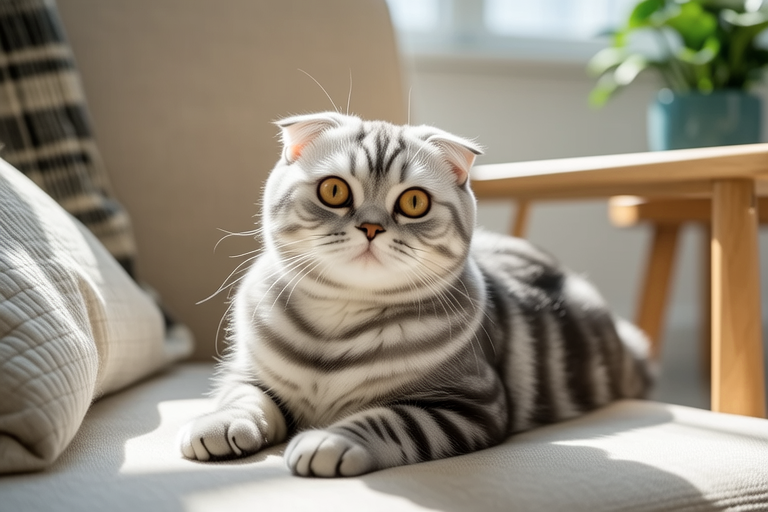
From Catwalk to Couch: Inside the Life of a Scottish Fold
Welcome to the fascinating world of the Scottish Fold, a breed known for its distinctive looks and gentle demeanor. This article will take you through the history, physical attributes, temperament, and care requirements of this beloved feline. We’ll explore popular myths about the breed and provide useful tips for those considering adopting a Scottish Fold.
A Brief History of the Scottish Fold
The Scottish Fold originated in Scotland in the 1960s when a shepherd named William Ross noticed a barn cat with unusual folded ears. He bred her with a local tomcat, and their kittens inherited the trait. The breed was recognized by the Governing Council of the Cat Fancy (GCCF) in 1973 but later banned due to concerns over genetic disorders. In the United States, the Cat Fanciers’ Association (CFA) began registering the breed in 1978, and it gained full championship status in 1991.
Unique Physical Characteristics
Scottish Folds are easily recognizable thanks to their signature folded ears, which give them an owl-like appearance. Their ears fold forward and down at birth, but the fold becomes more pronounced as they grow. Not all kittens develop folded ears; only those inheriting the dominant gene from both parents exhibit the trait. These cats come in two varieties: longhaired and shorthaired, with soft, dense coats that require regular grooming.
Temperament and Behavior
Scottish Folds are renowned for their calm and affectionate nature. They enjoy being around people and often follow their owners from room to room. Their curiosity makes them excellent companions, and they love to investigate new objects and situations. While some may be more reserved than others, most adapt well to different environments, making them suitable for families with children or other pets.
In show stages, Scottish Folds are elegant and poised, moving gracefully despite their compact build. At home, they’re content lounging on the couch or perching on windowsills, observing the world outside. Their quiet yet playful personalities make them delightful companions, always ready for a game of fetch or a cuddle session.
Common Health Issues
Despite their charm, Scottish Folds face several health challenges. One of the most significant concerns is osteochondrodysplasia (OCD), a condition affecting cartilage development that can lead to painful arthritis. Responsible breeding practices aim to minimize these risks by selecting healthy cats for mating. Regular veterinary check-ups help monitor the cat’s joint health and ensure early intervention if necessary.
Popular Myths About the Breed
One common misconception is that all Scottish Folds suffer from severe health problems. While it’s true that certain genetic factors increase the risk of specific conditions, many live long, healthy lives with proper care. Another myth suggests that their folded ears cause hearing impairments. However, studies have shown no correlation between ear shape and hearing ability.
Tips for Potential Owners
If you’re considering adopting a Scottish Fold, here are some essential tips:
- Choose a reputable breeder: Look for someone who prioritizes the health and well-being of their cats.
- Provide a stimulating environment: Engage your cat with toys, scratching posts, and interactive play sessions.
- Maintain regular veterinary visits: Keep up-to-date with vaccinations, parasite control, and routine examinations.
- Groom regularly: Brush their coat weekly to prevent matting and distribute natural oils.
Anecdotes and Stories
Meet Whiskers, a Scottish Fold who won hearts at a local cat show. Despite his shy demeanor, he captured attention with his striking appearance and graceful movements. His owner, Sarah, shared how Whiskers enjoys watching birds from his favorite window perch. “He’s such a character,” she said. “He loves sitting on laps and purring loudly, especially when I’m reading aloud.”
Another story involves Luna, a rescue cat who found her forever home after spending time in a shelter. Her adoptive family describes her as a loving and playful companion. “She’s become the glue that holds our family together,” said Mark, Luna’s owner. “Her gentle nature makes her perfect for kids and other animals.”
Behavior in Various Environments
On the catwalk, Scottish Folds exude confidence and poise. They move with elegance, showcasing their unique features to best advantage. Offstage, they prefer quieter settings where they can relax and recharge. Whether lounging on a cozy bed or exploring a new toy, these cats thrive in environments that cater to their needs.
At home, Scottish Folds enjoy the comfort of familiar surroundings. They appreciate routine and consistency, which helps them feel secure. Providing them with a designated space for sleeping, eating, and playing ensures they have everything they need. Interactive playtime keeps them mentally stimulated and physically active.
Conclusion
The Scottish Fold is a breed rich in history and character. From their unique physical traits to their gentle temperaments, these cats offer much to admire. By understanding their needs and providing appropriate care, you can ensure a lifetime of joy and companionship. Whether they’re strutting their stuff on the catwalk or snuggling up on the couch, Scottish Folds bring endless delight to those fortunate enough to share their lives.
