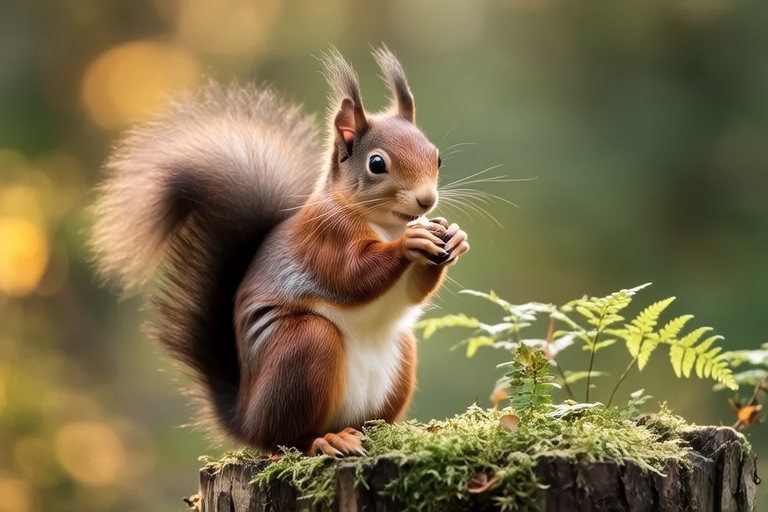
Unveiling the Secrets of Squirrels: Hidden Behaviors and Lesser-Known Facts
Squirrels are one of the most commonly observed animals in backyards across the world. They are often seen scampering up trees or busily gathering nuts and seeds. However, there is much more to these small creatures than meets the eye. This article will explore the hidden behaviors and lesser-known facts about squirrels, including their complex social structures, caching techniques for food storage, territorial habits, and communication methods. We’ll also discuss how they adapt to urban environments and interact with other wildlife, debunk common myths about squirrels, and offer tips on how backyard observers can better understand and coexist with these fascinating animals.
Complex Social Structures
Contrary to popular belief, squirrels are not solitary animals. In fact, they have complex social structures that involve cooperation and competition. While adult squirrels tend to be solitary, young squirrels often live in groups called litters. These litters consist of several siblings who remain together for a few months after birth. During this time, they learn important survival skills from each other and their mother. As they grow older, they may form loose associations with other squirrels, particularly during mating season. Male squirrels will compete for females, while female squirrels may cooperate to raise their young.
Despite their social tendencies, squirrels can also be quite territorial. They mark their territory with scent glands located on their cheeks and belly. If another squirrel encroaches on their territory, they will chase it away or engage in aggressive behavior. This territoriality helps ensure that each squirrel has enough resources to survive, particularly during the winter when food becomes scarce.
Caching Techniques for Food Storage
One of the most remarkable behaviors of squirrels is their ability to cache, or store, food. This behavior is crucial for their survival, as it allows them to stockpile food for leaner times. Squirrels use a variety of caching techniques, depending on the type of food they are storing and the environment in which they live.
For example, some squirrels bury nuts and seeds in the ground, creating what are known as “scatter hoards.” These scatter hoards are spread out over a wide area, making it difficult for other animals to find them. Other squirrels create “larders,” which are centralized caches of food stored in tree cavities or under rocks. Still, others use “middens,” which are large piles of cached food that can last for years.
Interestingly, squirrels are not always successful at retrieving their cached food. Studies have shown that they only recover about 70% of the food they store. The rest is left behind, where it can germinate and grow into new plants. This behavior plays an important role in forest regeneration, as it helps to disperse seeds across large areas.
Territorial Habits
As mentioned earlier, squirrels are territorial animals. They mark their territories with scent glands, and they will defend these territories against intruders. However, their territorial behavior is not always straightforward. For example, some squirrels will allow other squirrels to share their territory if they are not actively competing for resources. In other cases, squirrels may form alliances with neighboring squirrels to defend their shared territory against larger predators.
Another interesting aspect of squirrel territoriality is their use of vocalizations. Squirrels have a wide range of calls that they use to communicate with each other. Some of these calls are used to warn other squirrels of danger, while others are used to establish dominance or attract mates. By listening to these calls, backyard observers can gain valuable insights into the social dynamics of local squirrel populations.
Communication Methods
In addition to vocalizations, squirrels use a variety of other communication methods to interact with each other. For example, they use body language to convey information about their mood and intentions. A relaxed squirrel will sit upright with its tail down, while a nervous squirrel will crouch low to the ground with its tail held tightly against its body. Squirrels also use facial expressions to communicate, such as raising their eyebrows or flattening their ears.
Another important aspect of squirrel communication is their use of visual signals. For example, squirrels will often flick their tails to signal danger or excitement. This behavior is particularly useful in urban environments, where squirrels may need to alert each other to the presence of humans or other potential threats. By paying attention to these visual cues, backyard observers can better understand the emotions and motivations of local squirrel populations.
Adaptation to Urban Environments
As cities continue to expand, many animals are forced to adapt to urban environments. Squirrels are no exception. In fact, they have proven to be remarkably adaptable to city life, finding new ways to survive and thrive in human-dominated landscapes.
One of the most striking examples of squirrel adaptation is their use of man-made structures for shelter and food. Many squirrels have taken to living in attics, crawl spaces, and other enclosed areas within buildings. They also make use of bird feeders, trash cans, and other sources of food that are readily available in urban environments. By doing so, they are able to access resources that would otherwise be out of reach.
However, living in urban environments comes with its own set of challenges. Squirrels face increased exposure to predators, traffic, and other dangers. To mitigate these risks, they have developed a variety of strategies, such as crossing roads carefully, avoiding areas with high levels of human activity, and forming close-knit communities for protection.
Interaction with Other Wildlife
Squirrels are not the only animals that inhabit backyards. They often share their habitats with a wide range of other wildlife, including birds, insects, and other mammals. While squirrels can sometimes be seen chasing birds or competing for food, they also play important roles in maintaining the balance of local ecosystems.
For example, squirrels help to control insect populations by eating certain species of insects and their eggs. They also play a key role in seed dispersal, helping to promote the growth of new plants. In turn, other animals benefit from the presence of squirrels, as they provide a source of food for predators such as hawks, foxes, and snakes.
Myths About Squirrels
There are many misconceptions about squirrels that are perpetuated by popular culture and folklore. One common myth is that all squirrels are vegetarians. While it is true that squirrels primarily eat plant-based foods, such as nuts, seeds, and fruits, they are also opportunistic omnivores. This means that they will eat meat if it is available, including insects, bird eggs, and even small animals.
Another myth is that squirrels are lazy and spend most of their time sleeping. In reality, squirrels are highly active animals that spend much of their day foraging for food, caching, and grooming. They also engage in a wide range of other activities, such as playing, exploring, and socializing.
A third myth is that squirrels are pests that should be discouraged from living in backyards. In fact, squirrels play an important role in maintaining healthy ecosystems and providing entertainment for backyard observers. By understanding and appreciating the behaviors and needs of local squirrel populations, people can learn to coexist with these fascinating animals.
Tips for Backyard Observers
If you’re interested in learning more about the squirrels in your backyard, there are several things you can do to enhance your observations:
- Observe quietly: Squirrels are easily startled by loud noises or sudden movements. To get the best view of their behaviors, try to stay still and quiet. You can also use binoculars or a camera with a zoom lens to observe from a distance.
- Provide food: If you want to attract squirrels to your yard, you can provide them with a steady supply of food. Just be sure to choose appropriate foods, such as nuts, seeds, and fruits, and avoid feeding them unhealthy snacks like bread or candy.
- Watch for patterns: Squirrels often exhibit predictable patterns of behavior, such as caching food in the same location or following the same route through your yard. By watching for these patterns, you can gain valuable insights into their daily lives.
- Learn to identify individual squirrels: Squirrels can be identified by unique markings, such as scars or patches of fur. By learning to recognize individual squirrels, you can track their movements and interactions over time.
- Respect their space: While it’s fun to watch squirrels, it’s important to remember that they are wild animals. Avoid handling or feeding them directly, and always give them plenty of space to move around freely.
By following these tips, you can deepen your understanding of the squirrels in your backyard and develop a greater appreciation for their complex behaviors and important roles in local ecosystems.
Conclusion
Squirrels are fascinating animals that are full of surprises. From their complex social structures and caching techniques to their territorial habits and communication methods, there is much to learn about these small but mighty creatures. By understanding the behaviors and needs of local squirrel populations, we can better appreciate their contributions to our backyards and ecosystems. With a little patience and observation, anyone can become a backyard expert on squirrels and their hidden behaviors.
