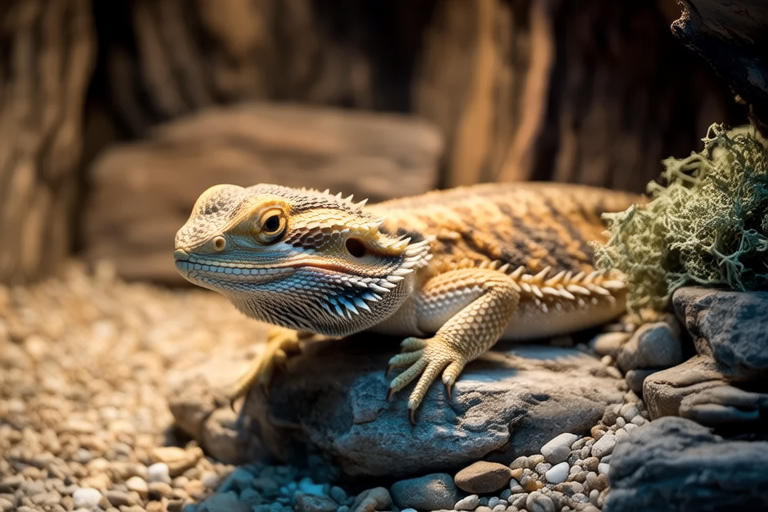
Secrets to Creating the Perfect Habitat for Your Bearded Dragon
Welcome to the fascinating world of bearded dragons! These charismatic lizards have become increasingly popular pets due to their docile nature and relatively low-maintenance care. However, to ensure your bearded dragon thrives, it’s crucial to create an optimal living environment. This guide will walk you through the essentials of building the perfect habitat, from temperature gradients to proper lighting, substrate selection, and more.
Selecting the Right Tank Size
The first step in creating a perfect habitat is choosing the right tank size. A general rule of thumb is to provide at least 10 gallons of space per inch of the bearded dragon’s length. For example, a baby bearded dragon might require a 20-gallon tank, while an adult could need up to 55 gallons or more. Always opt for larger tanks when possible, as they offer more room for exploration and growth.
Temperature Gradients
Maintaining the correct temperature gradient is vital for your bearded dragon’s health. Bearded dragons are ectothermic, meaning they rely on external sources to regulate their body temperature. You’ll need a warm basking area and a cooler area within the enclosure.
- Basking Spot: The basking spot should reach between 95°F and 110°F (35°C to 43°C). Use a high-wattage heat lamp positioned directly above a designated basking area.
- Cooler Area: The cooler side of the tank should remain around 75°F to 85°F (24°C to 29°C). This allows your bearded dragon to thermoregulate by moving between warmer and cooler zones.
Invest in a reliable thermometer to monitor these temperatures accurately. Avoid placing the thermometer directly under the basking light, as this can give misleading readings. Instead, place it near where your bearded dragon would naturally bask.
Lighting Requirements
Proper lighting is crucial for your bearded dragon’s overall health. They require both UVB and UVA lighting to synthesize vitamin D3 and maintain circadian rhythms.
- UVB Lighting: Install a full-spectrum UVB bulb that covers at least 75% of the tank’s floor. Replace the bulb every six months, even if it still appears functional, as UV output diminishes over time.
- UVA Lighting: While not essential for vitamin D3 synthesis, UVA light helps with mood regulation and color perception.
- Basking Lamp: In addition to UVB lighting, a basking lamp is necessary to provide heat and simulate natural sunlight. Choose a ceramic heat emitter or a red or blue bulb to avoid disturbing your bearded dragon during nighttime.
Ensure that the lights are placed correctly to prevent overheating and allow your pet to bask safely. Position them so that the basking spot reaches the recommended temperature without causing hotspots elsewhere in the tank.
Humidity Levels
Bearded dragons come from arid environments, so maintaining low humidity levels is key. Aim for humidity between 30% and 40%. Too much moisture can lead to respiratory infections and skin issues. To achieve this, use a hygrometer to measure humidity and adjust ventilation accordingly. Avoid misting the tank, as this can raise humidity levels too high.
Substrate Options
The substrate you choose plays a significant role in your bearded dragon’s comfort and safety. Some popular choices include:
- Cedar and Pine Shavings: Avoid these substrates, as they can cause respiratory problems and are toxic to bearded dragons.
- Newspaper: Affordable and easy to clean, but less aesthetically pleasing.
- Reptile Carpet: Durable and easy to clean, though some owners find it less natural-looking.
- Coco Fiber: Retains moisture, which may increase humidity, so use with caution.
- Dry Sand: Popular for its natural look and ease of cleaning. Ensure it’s smooth and free from sharp edges to prevent impaction.
For younger bearded dragons, consider using paper towels or reptile carpet until they’re older and more adept at handling sand. Regardless of your choice, always supervise your pet closely when introducing a new substrate to ensure they don’t ingest it.
Hiding Spots and Climbing Structures
Your bearded dragon needs places to hide and climb for mental stimulation and physical exercise. Provide multiple hiding spots throughout the tank, including caves, tunnels, and upturned planters. These structures should be large enough for your dragon to fit comfortably inside but small enough to feel secure.
Incorporate climbing structures like branches, rocks, and artificial plants. These not only enhance the aesthetic appeal of the habitat but also encourage natural behaviors. Make sure all climbing materials are securely fastened and safe for your pet to use.
Feeding Areas
Designate specific areas for feeding to minimize waste and contamination. Place food dishes in a location away from the basking spot to prevent food from becoming too warm. For live prey, consider using a shallow dish or bowl to contain insects and prevent them from escaping into other parts of the tank.
Regular Cleaning and Maintenance
Keeping the habitat clean is essential for your bearded dragon’s health. Remove feces and uneaten food daily to prevent bacterial growth. Clean the entire enclosure weekly, washing all surfaces and replacing any soiled substrate. Disinfect the tank thoroughly before refilling it with fresh substrate.
Inspect the tank regularly for signs of wear and tear, such as frayed wires or loose fixtures. Address any issues promptly to ensure your pet remains safe. Additionally, replace water bowls and food dishes frequently to maintain hygiene.
Final Tips
Creating the perfect habitat for your bearded dragon requires attention to detail and regular maintenance. By providing appropriate temperature gradients, lighting, humidity levels, and substrate, you’ll set your pet up for a long, healthy life. Remember to select the right tank size and accessories that promote your bearded dragon’s health and well-being. With dedication and care, you’ll enjoy many years of companionship with your scaly friend.
