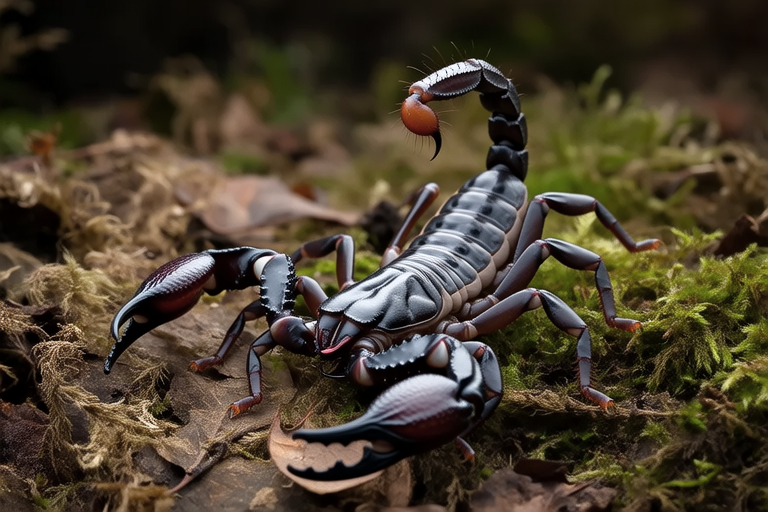
The Enigmatic Heterometrus Spinifer: A Journey into the World of an Exotic Scorpion
Introduction
In the vast realm of arachnids, one species stands out with its unique charm and mystique – the Heterometrus spinifer. Known commonly as the hairy forest scorpion, this creature is native to parts of Southeast Asia, particularly Thailand, Malaysia, and Indonesia. This article delves into the fascinating world of Heterometrus spinifer, exploring its distinctive physical traits, habitat, behavior, diet, reproduction, and the myths and misconceptions surrounding it. We will also touch upon the scientific research and conservation efforts dedicated to understanding and preserving this remarkable species.
Physical Traits
The Heterometrus spinifer is easily distinguishable by its robust appearance and dense covering of hair-like setae, which give it its common name. Adult scorpions can reach lengths of up to 13 centimeters, making them one of the largest scorpions in their range. Their coloration varies from dark brown to black, providing excellent camouflage against the forest floor and rocks they inhabit. The most striking feature of these scorpions is the presence of long spines on their pedipalps and legs, which serve both as defensive mechanisms and aids in capturing prey.
One of the most intriguing aspects of the Heterometrus spinifer is its sensory capabilities. Like all scorpions, it possesses pectines, comb-like structures located beneath the abdomen that help detect vibrations and pheromones in the environment. These sensory organs are crucial for navigation, communication, and detecting potential mates. Additionally, the large eyes on the carapace allow for low-light vision, enabling the scorpion to hunt effectively during twilight hours.
Habitat
The Heterometrus spinifer thrives in humid, tropical environments, often found under logs, rocks, or within crevices in caves. They prefer areas with high humidity levels and temperatures ranging between 25°C and 30°C. In the wild, these scorpions are predominantly terrestrial, spending most of their time on the ground rather than climbing trees or bushes. However, they are occasionally found in lower vegetation, especially when searching for food or seeking shelter.
Their preference for moist, shaded habitats makes them well-adapted to life in dense forests, where they can find ample cover and prey. Despite being primarily ground-dwelling, they have been observed climbing short distances to reach higher vantage points or to escape predators. The dense vegetation and complex terrain of their natural habitat provide numerous opportunities for exploration and discovery, making each encounter with a Heterometrus spinifer a unique experience.
Behavior
The behavior of the Heterometrus spinifer is marked by its nocturnal habits and solitary nature. These scorpions are active during the night, venturing out from their hiding places to hunt for food. They are highly territorial and aggressive towards intruders, including members of their own species. When threatened, they adopt a characteristic defensive posture, raising their tail over their back and facing it towards the perceived threat.
Despite their formidable appearance, Heterometrus spinifer scorpions are generally docile and non-aggressive towards humans. However, they will defend themselves if provoked or cornered. Their venom, while potent enough to subdue small prey, is not considered dangerous to humans. Nevertheless, caution should always be exercised when encountering these creatures in the wild.
Diet
The diet of the Heterometrus spinifer consists mainly of insects, spiders, and other small invertebrates. They are opportunistic feeders, taking advantage of whatever prey crosses their path. The scorpion’s powerful claws, or pedipalps, are used to grasp and crush their victims, while venom delivered through stingers located at the tip of the tail immobilizes them. This combination of physical strength and chemical weaponry ensures that the Heterometrus spinifer is an efficient predator in its ecosystem.
Interestingly, the scorpion’s diet also includes some plant matter, such as seeds and fruits. While this may seem unusual for a carnivorous arachnid, it suggests that the Heterometrus spinifer has adapted to exploit various food sources in its environment. This flexibility in diet contributes to its success as a species and highlights the importance of studying these creatures to understand the complexities of their ecological roles.
Reproduction
Like many scorpion species, the Heterometrus spinifer reproduces sexually, with males performing elaborate courtship dances to attract females. Once a pair has mated, the female carries fertilized eggs internally until they hatch. After birth, the young scorpions, known as scorplings, remain attached to their mother’s back for several days before dispersing to lead independent lives.
The reproductive cycle of the Heterometrus spinifer is closely tied to environmental conditions, particularly temperature and humidity. Research has shown that changes in climate can affect breeding patterns and population dynamics, underscoring the need for ongoing studies to monitor and protect these fascinating creatures.
Myths and Misconceptions
Throughout history, scorpions have been shrouded in mystery and fear, often portrayed as dangerous and malevolent creatures. However, the Heterometrus spinifer challenges many of these misconceptions. While their appearance may be intimidating, these scorpions are generally harmless to humans and play important roles in their ecosystems.
One common myth about scorpions is that they glow under ultraviolet light due to bioluminescence. In reality, this phenomenon occurs because the chitin in their exoskeleton reflects UV light, causing them to appear fluorescent. Another misconception is that all scorpions are venomous and deadly. While it is true that most scorpions possess venom, the toxicity varies widely among species, and many, like the Heterometrus spinifer, pose little threat to humans.
Scientific Research and Conservation Efforts
Researchers are continually working to uncover new information about the Heterometrus spinifer, focusing on aspects such as venom composition, behavioral ecology, and genetic diversity. Recent studies have revealed that the venom of the Heterometrus spinifer contains peptides with potential medical applications, including pain management and cancer treatment. These findings highlight the importance of conserving scorpion populations for future discoveries and innovations.
Conservation efforts for the Heterometrus spinifer
